Is My Child A Fussy Eater?
The following true stories were witnessed by me at different places and settings over recent months. The children’s names were changed.
Story #1
Juli (5yo) asked me if she could “taste it first” before I spread the yellow jam (marmalade) on her toast. She always has butter and red jam (berries) on her toast, but that afternoon, she felt like trying the other jam. After the taste test, she decided “it tastes funny, but I’ll have this one today”.
Story #2
I cooked the Bolognese sauce with grated onions and carrots, very finely grated, in the food processor! Even with my glasses on, I could not spot anything but the granules of minced beef in it! Jack (3yo), very skillfully I must say, managed to pick out of the sauce every tiny fragment of onion he found. Not the carrot fragments, just the onion’s! He enjoyed the pasta and the sauce, but wouldn’t eat the onion bits.
Story #3
Most days at day care, Mike’s (4yo) lunchbox will be empty by after lunch. By that time of the day, he will have smashed his flavoured yoghurt, pureéd fruit, half muffin, dried fruit and cheese stick. Not every day he will eat his pasta, sent for lunch. Because there is usually nothing left in his lunchbox, the educators will offer him something from the kitchen for his afternoon snack. If he is offered anything cheesy or sweet (not whole fruit though), he will eat it, everything else will be rejected.
Story #4
Bruce (3yo) spends meal times whinging, sometimes crying, with his head down onto his folded arms on the edge of the table. He never looks at the food on offer neither eats it or drinks anything. Any attempt of encouragement is replied with a shout and both hands blocking his mouth. He will usually spend the whole day on an empty stomach, but sometimes will accept a bottle of milk. If offered Oreo biscuits or Jatz crackers, he will very slowly eat one or two pieces. He also eats commercial chicken nuggets. Nothing else!
Four situations, four different children and their different behaviours towards meal times and foods. Were all four children making a fuss? Or were they behaving as expected? Did one of these stories ring bells for you? I’d say it’s very likely your child’s behaviour towards food will fit, or be very close to, one of these four scenarios.
If that is the case, you have a fussy eater, right? Or a picky eater, or a choosy eater, or a finicky eater, or a challenging eater, or a slow eater, or an avoidant eater, or a restrictive eater, or any other label you fancy, right? (1, 2, 3)
Well, not so fast! How can we tell apart the fussy eater from the “normal” toddler, usually fussy about everything!? Are fussy eaters assessed, labelled and classified? If so, how?
First of all, it is necessary to define what fussy eating is. Most of the definitions published by researchers and experts share the same terms in this one that characterises the fussy eater:
A fussy eater often refuses new foods and only accepts a limited range of foods.(1, 2)
It is important to emphasise that the fuss has to be present OFTEN, not only occasionally.
As all parents know, toddlers and pre-schoolers can be fussy pretty much about everything, and food is just part of it all. So, some fuss is to be expected at meals times too.
You may ask, “If my kid will fuss about food anyway, how can I know how bad it is or if I shouldn’t worry at all? Are there ‘degrees’ of fussy eating?”
There are! But categorising it is not a straightforward task because the assessment methodology varies as there isn’t an absolute consensus amongst the experts(3, 4). Nevertheless, most experts agree that the most common signs of fussy eating are

If you have ticked some boxes apples from the list above, you may have a fussy eater at home. How much you should worry about it though depends on a number of factors which need proper assessment by a qualified professional.
It’s important to also mention that some children may present fussy eating habits due to psychological or physical issues. Conditions like Attention Deficit and Hyperactivity Disorder (ADHD), autism, anxiety, depression, cognition problems etc can impair a child’s ability to developing healthy eating habits, thus exhibiting fussy eating behaviour(4). In these cases, along with a specific professional, like a psychologist or a speech pathologist, a nutritionist can assist with the eating pattern issues, in a more holistic approach.
SOONER IS BETTER THAN LATER
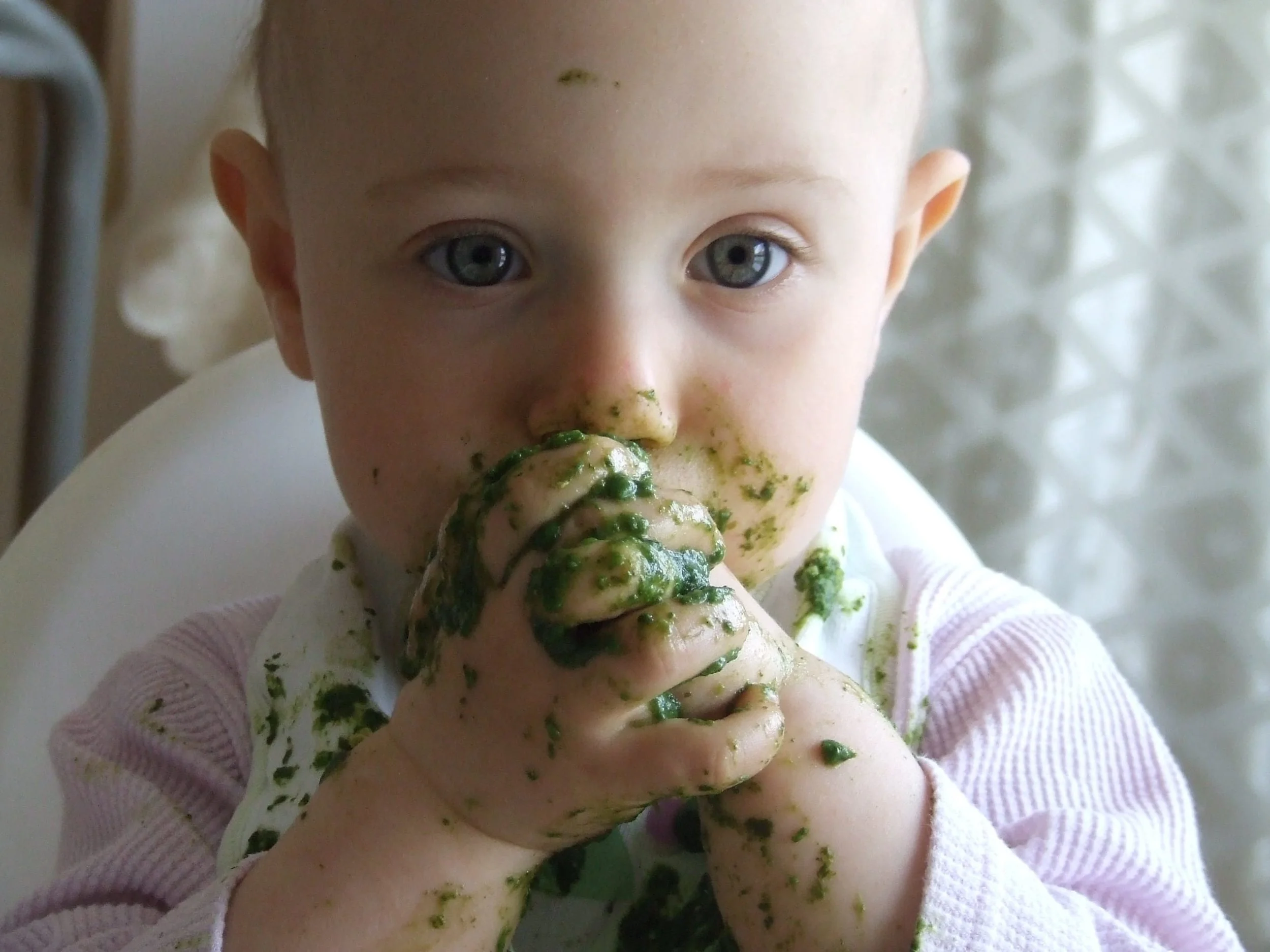
Food exploration can be messy, but is an important (and fun) part of learning to enjoy new foods.
In a long term, significant negative impact of mild fussy eating to the child’s health is rare(4), but if you have concerns about your little one’s dietary habits, chances are that you are right and do have a fussy eater in hands that needs extra support to get back on track to a lifelong healthy eating. And you would feel more at peace by checking it up with a professional. I say this because evidence shows that eating habits and food preferences are much more difficult to change after the age of three(5)!
“Eating habits and food preferences are much more difficult to change after the age of three.” - Rebecca Thomas, Registered Dietitian
To assess your child’s health status, you can consult with your family health nurse, or your trusted general practitioner or paediatrician. Now, when it comes to assessing and managing fussy eating, which has more to do with eating habits and behaviour, you will benefit from seeking help of a qualified professional who specialises in children’s nutrition and fussy eating. These professionals will certainly be able to equip you with strategies to overcome fussy eating and enjoy mealtimes again!
Learn a bit more about fussy eating here.
Read my commentary on each of the mentioned cases in the next post Not A Fussy Eater, But Still Making A Fuss.
References
Helping Children Develop a Positive Relationship with Food. Book (2018). Jo Cormack (UK)
Fussy Eating. Article (2010). Eve Reed (AUS)
Picky/Fussy Eating in Children: Review of Definitions, Assessment, Prevalence and Dietary Intakes. Research (2015). Taylor, Wernimont, Northstone & Emmett
The Spectrum of Picky Eating. Webinar (2020). Dr. Chris Smith & Rebecca Thomas (UK)
Infant Nutrition: From Breastfeeding to Baby’s First Solids. Course (2020). Prof. Karen Campbell (Deakin University)(AUS)