Tapioca
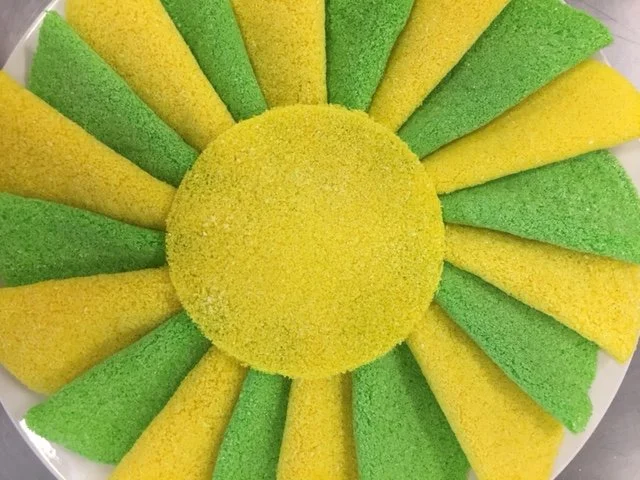
Coloured tapiocas (Aussie and Brazilian colours), photo by Fern Rodrigues
“Tem farinha e água!” The sentence that translates as “There is flour and water!”, in addition to “A wealth!”, was the answer Johann Baptist Von Spix (biologist) and Karl Friedrich Philippvon Martius (botanist) heard from a local traveler, in 1819, when, travelling in the Brazilian Amazonia jungle, nearby Sao Francisco river, exhausted, famished and thirsty, asked if there was any food in the vicinities: “A wealth! There’s flour and water.”
The flour the traveler referred to is tapioca – Brazilian-Indigenous word that means “squeeze out” – which is the fine sediment from the first press of the manioc pulp. Tapioca and other derivatives of manioc – an edible root also known as cassava – is an absolute Brazilian staple today as it was hundreds of years ago to Brazilian aboriginals.
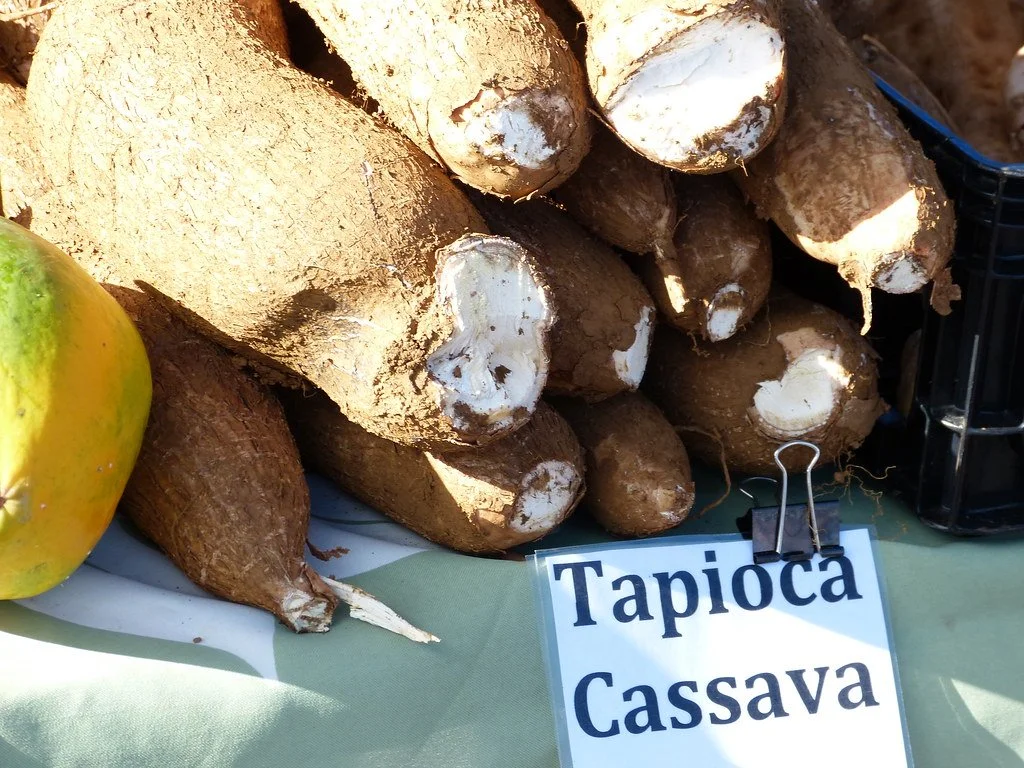
Tapioca, Manioc or Cassava root, Image: Flickr
Tapioca not only is the name of manioc starch flour, but is also the name of a simple dish consumed at breakfast today just like hundreds of years ago on Brazilian streets and houses. It consists of just tapioca flour and water – “A wealth!” – served as a pancake with seasoning to taste and any filling the cook pleases, folded in two, in a half-moon shape. But also often eaten plain in substitution for bread, with meals.
The flour itself does not provide protein neither fats. It contains around 86% of carbohydrates in the form of starch and not much else. It is gluten free and jellifies really quickly, allowing for a large range of food preparations: cakes, breads, as a thickening ingredient in soups and sauces, also desserts like flans and jellies.
I like this version of tapioca with a luscious pink hue, given by the beetroot juice the flour soaks in for hours. It is filled with cheese and my recipe and cooking method is below.
Pink Tapioca with Tasty Cheese (makes 20 tapiocas – 13cm diameter)
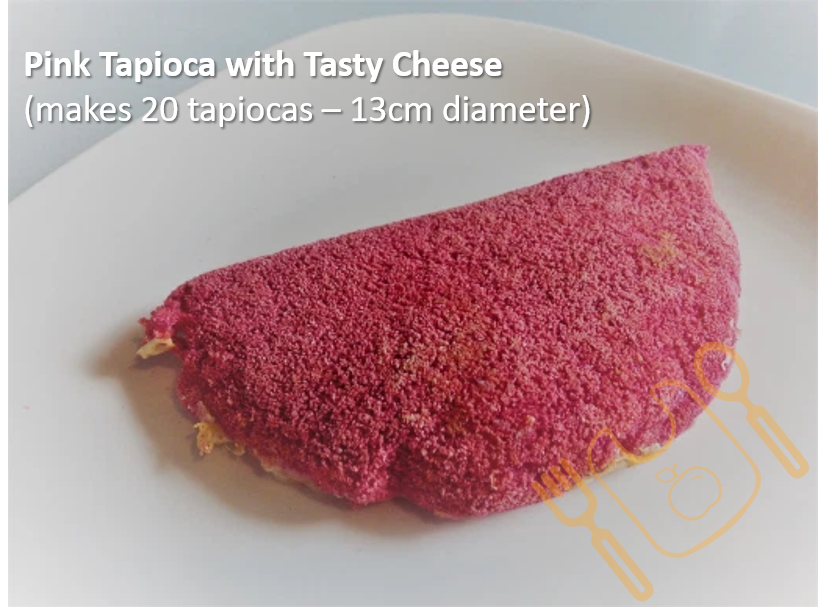
Pink Tapioca with Tasty Cheese, Image: Fern Rodrigues
Ingredients
2 1/2 (250g) cups tapioca starch
1 medium beetroot, washed, skin on
2 cups (500ml) cold water
Tasty cheese, grated or shredded (as much as you want)
Method
Scrape off the beetroot blemishes, chop it into cubes and crush it the with water using a blender. In a bowl, strain it through a sieve, pressing the pulp with the back of a spoon. Keep the pulp to be used in other recipes.
Add the tapioca starch to the beetroot liquid. Mix it up a little and transfer it to a tray dish. Keep it soaking for at least 8 hours or overnight. You don’t need to keep it in the fridge. Just cover the tray with a lid or a tea towel.

Pink Tapioca with Tasty Cheese, Image: Fern Rodrigues
After that time, drain the liquid into a container and keep it to cook rice or pancakes or cakes (nothing goes to waste here!). You can tip the tray quite steep as the liquid will run down, but the starch will be “stuck” on the bottom of the tray.

Beetroot juice and coloured tapioca starch, Image: Fern Rodrigues
To get rid of further excess liquid, use a tea towel (or another cloth) or paper towels to press against the surface of the pink starch. It will stain your towel, so use a tea towel or a cloth you wouldn’t mind turning pink, or use paper towels instead. I use 7-8 sheets of paper towel that I then let dry and used in art craft with the children I work with (nothing goes to waste here!).

Beetroot juice excess soaked off the surface of the coloured tapioca starch, Image: Fern Rodrigues
Keep on ‘drying’ the starch until its surface looks opaque and the towel doesn’t get wet anymore.
Then, with a spoon, break the starch into blocks. Press (or grate) each small block through a sieve. You will obtain a velvety wet flour that will keep well for a week in an air-tight container in the fridge or for months in the freezer.

Coloured tapioca blocks (right) and sieved (left), Image: Fern Rodrigues
Place a frying pan on medium heat. To know if the pan is hot enough to cook your tapiocas, sprinkle some of the flour onto the pan. If it pops after a few seconds, discard the sprinkles, turn the heat down and start cooking.
Shake a couple of table spoonsfuls of the flour through a sieve onto the frying pan. Add more if needed to cover the bottom of the pan and make an even layer of tapioca. Let it cook for about 30 seconds. At this point, it should hold together and you should be able to move it from side-to-side. It wouldn’t stick to any surface, but it does help if you use a nonstick pan. Do not use any sort of grease.
Top half of the tapioca disk with cheese and then fold it in half. Cook for about 1 minute on each side to let the cheese melt and bind the tapioca sides together.
Enjoy it at any time of the day!
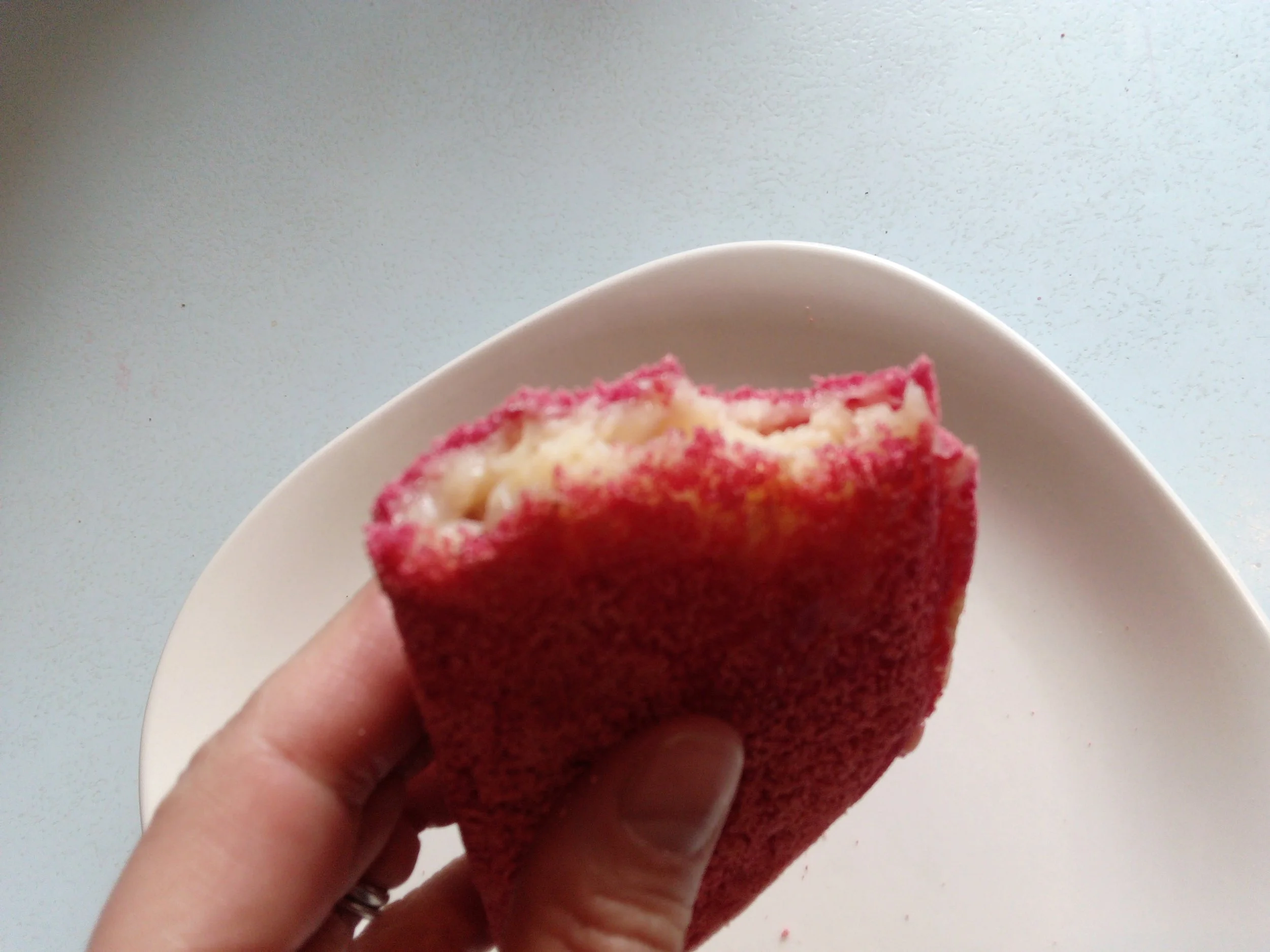
Nutritious quick meal, Image: Fern Rodrigues
It can be coloured with spinach or kale (green), turmeric (yellow), carrots (orange) or even with artificial food colourings, as the yellow and green ones in the photo on the top.
This can be an attractive way to feed fussy eaters with some goodies, depending on the filling you choose.