Let’s Be Food Smart - part 2
COOK and STORE SMART
In addition to PLANNING and SHOPPING SMART which were the topics discussed in part 1, it is also important to store food properly so it doesn’t go bad before we eat it. The Australian Department of Agriculture, Water and the Environment estimates that each Australian throws away about 300kg of food every year. This means 1 in 5 groceries bags (1)!!

So, to avoid that person to be you, you could try:
FRESH HERBS
If you're tired of buying a bunch of fragrant fresh herb, using it in one cook, forgetting about it in the fridge for days, then ending up throwing it away, almost liquified, chop up what is left of your fresh herbs and freeze them in ice cube trays filled with olive oil. You won’t be able to use them as fresh herbs anymore, sprinkled on top of dishes, but they can flavour soups and sauces. Just add the frozen cube into the pot as you cook.
Some herbs like rosemary, mint, thyme, lavender and others can flavour drinks really well. Have a look at Jamie Oliver’s suggestions here. So, you can freeze them in water into cubes to be added to your glass of sparkling water or cocktail.
You can also dry some herbs' leftovers. Herbs like mint, rosemary, sage, thyme and dill will dry easily by laying them on absorbent paper towel or hanging them in a bunch and keeping them in a dry room for a few days. Have a look at this blog post from Insteading’s website for more on this.
And don’t throw away stalks and stems. Most are flavourful and can be tied-up in a little bunch and added to soups, sauces, stock, then be discarded into your compost or garbage bin afterwards.
For more excellent tips about storing and using herbs, Thanh Truong is your guy.
FRUIT
Fruits are so versatile when it comes to dishes you can prepare with them, especially desserts: fruit salad, jelly, crumbles, cakes, ice cream…
To encourage the whole family eat [more] fruit, you can make it the easy snack choice: wash, peel, seed, chop, portion, store.
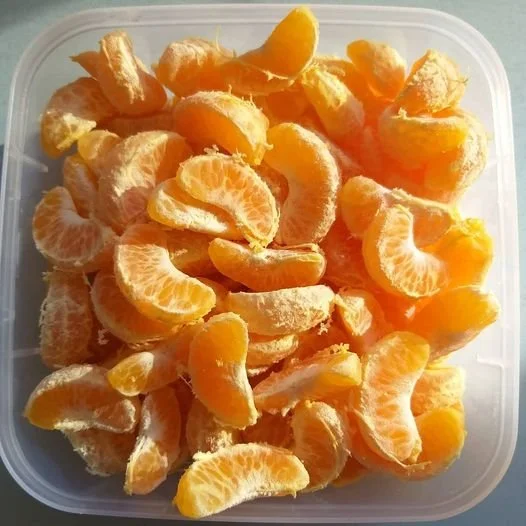
Peeled mandarins ready to go, photo by Fern Rodrigues.
They can also be chopped or crushed up to be frozen and then used in smoothies. Or even to make jams. Great for those fruits starting to show signs of overripe.
Thanh Truong (aka The Fruit Nerd) also has good suggestions to store fruits. And that’s good because, like herbs, some like cold, but some don’t. He shares ways of storing fruits in this video.
One more tip is that you can consume canned/jarred or frozen fruits with no fear of lacking nutrition. The nutritional value of fruits processed like this is almost the same as in fresh fruits. And they keep for much longer.
VEGETABLES
Many vegetables have edible skin, stem/stalk, seeds and leaves:
Pumpkin is a whole consumable fruit – ok, it’s in the vegetables section because we eat it as a vegetable, but technically it is a fruit because it bears seeds! Its skin and seeds are also edible. I don’t peel pumpkins of any variety to prepare soups, roasts, stir-fries. I only peel it to make jam. Yes, you read it right, jam! I grew up eating pumpkin jam (it’s a fruit anyway…). And that’s a great way to use up overstock.
Look at a broccoli’s stalk. It is large and fleshy. And flavourful too. I chop it up or grate it and use it in all dishes: stir-fries, soups, in rice, slices, omelettes…
Vegetables are as nutritious canned and frozen as they are when fresh, like fruits.
Pickling changes their nutritional value a little due to the cooking/sterilising step, but on the other hand, pickling adds amazing new flavours!
Like fruits, some vegetables also make great snacks. Make it an easy option too! 😉
You can also freeze a lot of vegetables. The watery ones like tomatoes, celery, cucumber are not good for freezing. But harder ones like carrots, potatoes, pumpkin need a little cooking (microwave, steaming or boiling) to then be frozen. They will last for months in the freezer.
HOME MADE DISHES
If your dish isn’t an emulsion – mayonnaise, mousse, soufflé – it can be frozen. You can cook in bulk and then portion it to cool down and freeze.
You can portion a large batch to family meal size which would feed all members of your family for one meal, like a tray, for example. Or you can portion it into individual servings (slices, pieces, small container). Mostly all dishes will defrost well in the fridge for a few hours (overnight is fine). Then, you only need to re-heat it – oven and microwave are great for it.
Jamie Oliver is a brilliant help for all-things kitchen! This link takes you to his “money saving tips freezer”. You will learn heaps of ways to freeze foods and save time and money. You’ll love it!
These are just very few ways you can make the most of your food, avoiding wasting food and money, and saving also time.
What are your tricks to save foods from the bin while feeding well your family?
References
1. Tackling Australia’s Food Waste (Topic, 2021, Aus). www.environment.gov.au/protection/waste/food-waste