Lunchbox: Not Just A Box With Lunch

It seems that finally kids will be going back to school very soon in New South Wales. Parents will finally see themselves free from all day whinging, nagging, snacking… but many will then get back to lunchbox fixing! A task that can be as unwanted! 😊
I’ve written about lunchboxes many times, but am revisiting it once again as I’ve been asked about it quite a few times lately…
A kidspot.com.au website’s survey run four years ago, found that two thirds of Australian mothers who prepare lunchboxes for their children have negative emotions towards the task. They feel rushed, lacking in imagination, bored and frustrated. Also, the culture of shaming families for sending the wrong snacks in their children’s lunchboxes, and the pressure to produce “Instagramable” lunchboxes have created a legion of resented mothers who are just trying their best to nourish their children.
But, what constitutes a so-called healthy lunchbox anyway?
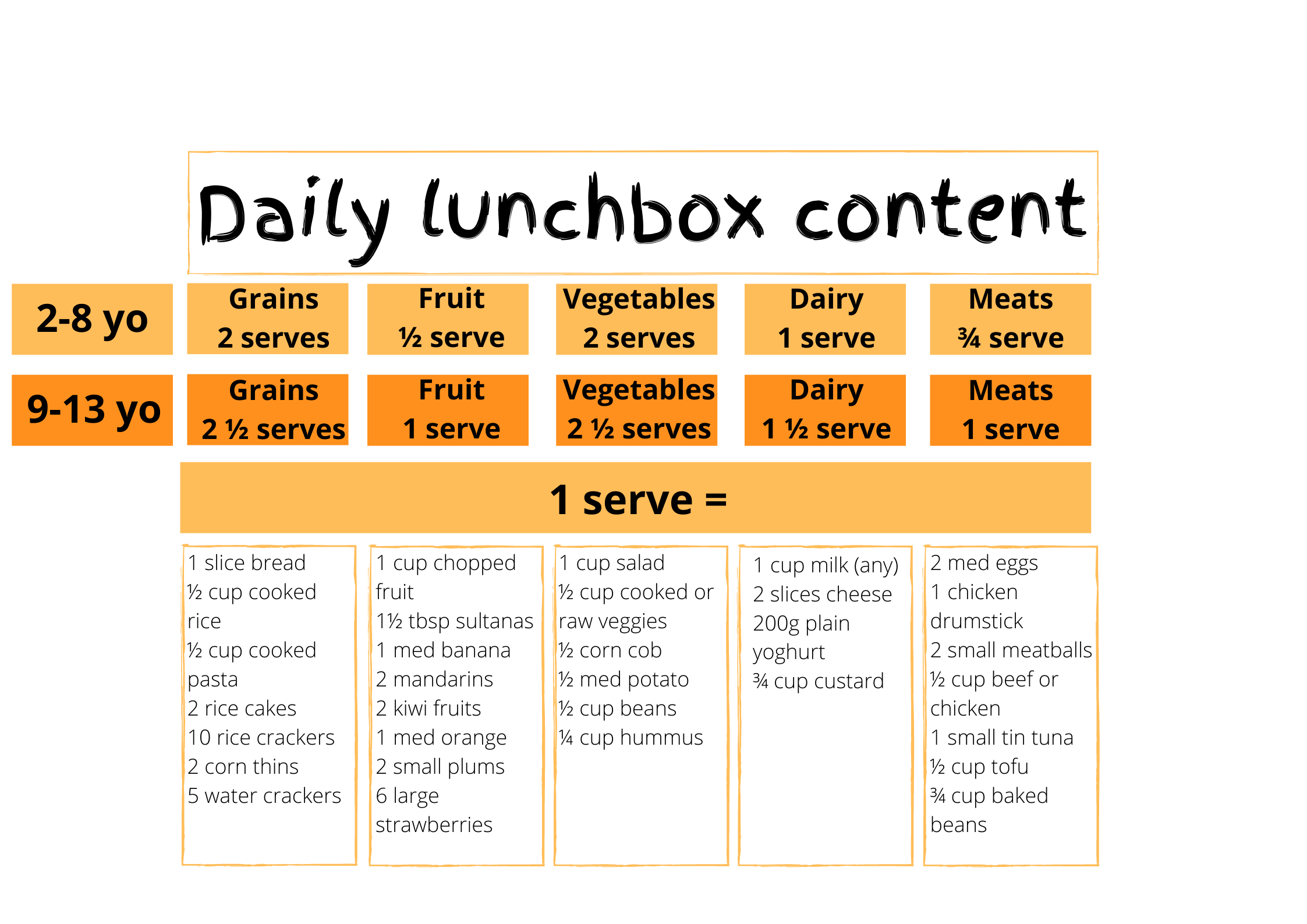
Let me start by saying that about half of a child’s daily dietary needs will be taken while at school or daycare if they attend one. That means the lunchbox contents should be of, at least, lunch and two snacks (for morning and afternoon). If the child spends more than 8 hours a day in childcare, one more snack should be added to the lot. And, honestly, nothing else. Well, also water!
The chart below is based on recommendations by the Australian Dietary Guidelines depending on children’s age.
There shouldn’t be anything fancy about a lunchbox, and I don’t mean its design, only the food!
Lunch can perhaps be leftovers from dinner and all other items could be common foods that would probably be in the pantry to feed the rest of the household. There’s actually no need for “children’s snacks”! You know, those blisters with creamy cheese and 2 crackers, or mini cereal bars or pureed fruit pouches that are marketed as children’s foods which are not always the most nutritious options, are expensive and create a lot of packaging waste.
I don’t mean to say that all packaged foods aren’t suitable to go in your child’s lunchbox. You’ll certainly find a range of choices at the supermarket that provide decent nutrition for children. But that’s when things can get a bit messy as choosing the good ones out of the not-so-good lot can be tricky. I’d recommend you to keep an eye on only two items in the Nutrition Information Panel on the back of the package: sugar and sodium. Aim for taking home only products that contain:
- 10g of sugar or less per 100g of product
- 120mg of sodium or less per 100g of product
If you mostly send home-made and wholefoods in your kid’s lunchbox, you have less to worry about.
Most daycare services and schools will have a food policy. Places that have a comprehensive food policy that includes recommendations for lunchboxes which will usually recommend, not impose, appropriate foods to be sent, can also be of some help for you to decide what to send in your kid’s lunchbox. I’m sure those will be the foods you have been wanting them to eat anyway.
Another thing you may want to consider is cost. I don’t mean cutting cost by sending lower quality or less food. But you can be smart when buying packaged food. Have a look at two examples below.

You can save more than $300 per year sending the same two foods in your kid's lunchbox just by changing the packaging they come in!!
I did the calculations based on
- Coles.com.au's prices as of 30/09/2021
- One serve per child per day
- 200 school days per year
You may even be interested in the amount of packaging you WILL NOT have to dispose of:
- Two hundred 200mL carton poppers instead of only fourteen 3L plastic bottles, and
- Two hundred plastic cartridges instead of only four plastic bags of 1kg cheese block and 15 cracker boxes
by the end of the school year.
Now, I appreciate the convenience of buying individual packets, but if you are on a budget - and who isn't these days? -, you may like to take up on the inconvenience of cutting a few slices of cheese and save almost $240 by the end of the year! Just saying...
Before I go, I would like to touch one more aspect about children’s lunchbox.
LUNCHBOX = COMFORTING FOOD
I don't mean sending treats and things we, as adults, use as comfort food. Nothing like chocolate, pastries, cakes etc.
What I mean by LUNCHBOX = COMFORTING FOOD is that foods sent in your child's lunchbox should be foods your child feels is safe to eat and that feels comforting.
I'll explain it further:
Send foods you are sure that your little one is already familiar with, that they accept and enjoy.
I say this because, when your child is away from home for some hours, at daycare, at pre-school, or at big school, many things can happen. They may spend the whole day playing and learning, having fun, but also, sometimes there can be upsetting moments like getting hurt from a fall over or by feeling homesick.
When your little one is feeling not their best, opening the lunchbox and finding their favourite fruit or sandwich or a wrap that brings lovely memories of both of you making it together or popcorn that reminds them of the last time you went together to the movies… might be just what they needed as a “pick-me-up”.
Now, even if they don't actually need any comfort, but they have been upset because of something that happened, and they open the lunchbox to only find confronting foods, how do you think they will handle their feelings? You know that last straw that broke the camel's back...?
I always advise parents to send in their kids' lunchbox only foods the kids already like and are familiar with. It is best to introduce new foods or repeat foods that are not yet loved by your little human only when having meals at home.
And if you're not 100% comfortable with the comforting food you send in your kid's lunchbox because you think it should be healthier, talk to me and let's have a look at it together.
Remember that I will not tell you what you should be offering to your kids, but will educate and reassure you on your kids' dietary needs and support you however you need to convince them to actually eat what YOU want them to eat.
Still looking forward for lockdown to be lifted?
Get more ideas to pack a successful lunchbox that will get eaten: check MY LUNCHBOX HOW TO eBook.