Food Bias in Early Childhood
I’m serving afternoon tea for the children at a daycare and one boy, around five years old, refused to come “because sometimes it has foods that are not my favourite”. This is his usual answer to most meals offers while at daycare. As I always do, I accepted his refusal and didn’t make a big deal of it. However, as the last child was leaving the table, after eating, he came by saying he wanted to have something to eat. I asked if he wanted yoghurt and WeetBix Bites – cubes of cereal (wheat flakes) with dried fruit. He said yes to both.
As he started eating – well, picking the dried fruit out of each cube to eat them first –, he asked me if I knew that eating junk food made you unhealthy. I said, “Does it?”. He said “Yeah, it does. When you eat junk food more than healthy foods”. I replied, “That’s right. When you eat more junk foods than you eat healthy foods, it may make you unhealthy”.
Then, I asked him if he knew what kind of foods were junk. He said it was “All foods you buy at McDonalds”. Then I asked if he could tell me what foods were healthy and he said “Foods you buy at the shops”. I asked “What kind of foods you buy at the shops?” and he replied “Fruits and vegetables”.
So, I asked him if he knew if yoghurt was junk. He replied “No idea”. I then asked about the WeetBix Bites and he said emphatically “WeetBix is healthy”. Then he had a closer look at the cube he was holding between his fingers and said “But it has these chewy bits in it”, frowning. I asked if he knew what the chewy bits were and he shook his head. I explained they were bits of dried fruit and he wanted to know what fruit. I took the package to check and told him they were berries. He shouted “Blueberries and raspberries” pointing to the picture on the box.
He then asked “Do you eat junk food?” and went on answering it himself: “No, you don’t eat junk food, you’re not fat. Junk food makes you fat”. I said “Yes, I eat junk food sometimes” and he replied “But not more than healthy food because you’re not fat”.
I decided to leave the conversation at that because the boy was already leaving the table, after eating only the cereal cubes, chewy bits and all, and leaving the yoghurt untouched. Also, because I was there as a casual educator and not as a nutritionist, so I wouldn’t have the time and resources to assess that boy’s situation to provide much meaningful address.
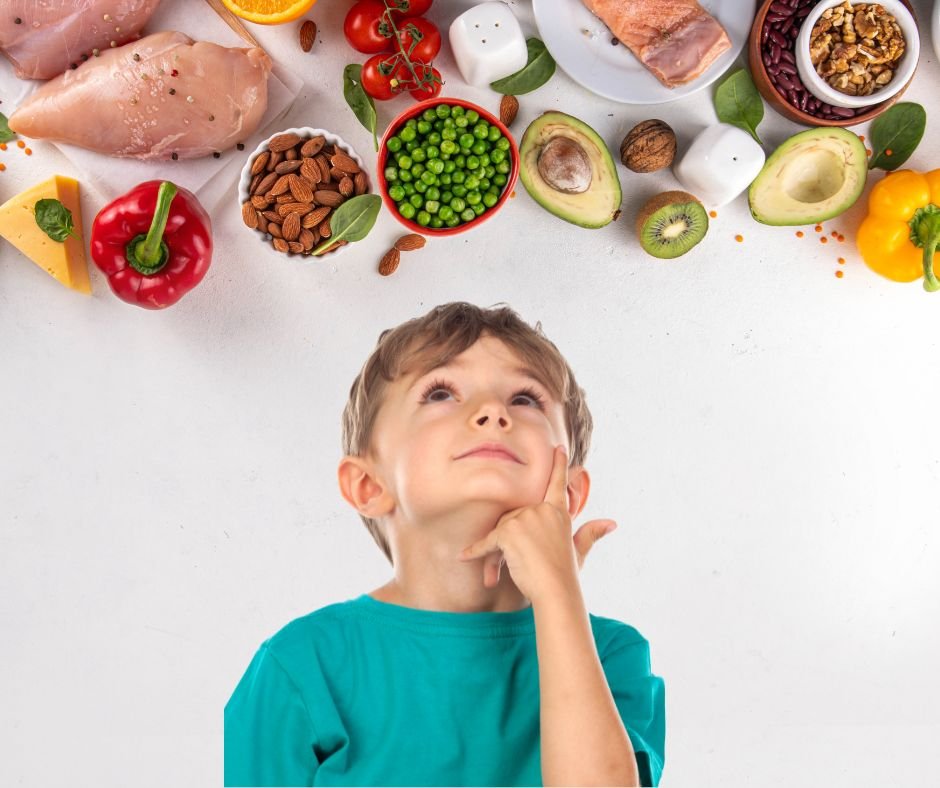
Children should not be made to choose foods based on nutritional content or healthiness.
I suspect that that boy learned those statements from adults he trusts as it has been documented in the literature. Children repeat statements they learn from trusted adults, like their mothers, for example (1), so I believe he heard things similar to “All foods you buy at McDonalds [are junk food]” from one of his trusted adults.
Children also create cognitive scripts from frequent events that happen in a particular context and in a particular sequence (2). They then use these scripts when a similar context presents again. So, in that exchange with me at daycare, that boy put into practice his script of junk food-eating habit leading to overweight and illness.
This behaviour has elements of food bias which is a non-neutral view and attitude towards food, like calling food names such as “healthy/unhealthy”. Food bias can have a negative effect in children’s concepts of food and healthy eating. A review published in 2024 reported studies that described how children and their parents can see obesity as a negative attribute that is associated with unhealthy food choices (3). Our boy seemed to be certain that choosing to eat often at McDonalds is a pathway to obesity and sickness and that slim people are healthy. He is already food biased.
What we say to young children about food and healthy eating matters. In fact, the least we talk about healthy eating with them, the better. The French have a habit of using mealtimes to teach their children about food. The conversations during meals go around foods’ origin, quality, taste and preparation methods instead of their nutritional content or (un)healthiness. The result: French children eat more vegetables and fruit when compared to American children whose parents emphasise the nutritional value of foods to convince their children to eat (4, 5). The authors of The reflective eater study argue that “French children’s readiness to eat fruits and vegetables is not linked to them being healthy, but rather is derived from the cultural significance of experiencing sensory pleasure from food and from being able to talk about and share these experiences with others” (4).
So, going back to our little friend, he ate only the cereal which he ‘knew’ is healthy, but left in the bowl the yoghurt, perhaps because he had “no idea” if it was healthy. I believe that was the reason for him not touching the yoghurt because he wouldn’t have said ‘yes’ to it when I offered if he knew he didn’t like it as his attitude towards meals comes from the premise that “sometimes it has foods that are not my favourite”. And this realisation is troubling to me: that boy, just five years old, may be choosing to eat ONLY foods he was told is healthy, regardless if he likes them or not.
I hope we can all be a little more like the French and enjoy foods we want our children to eat, together with them, without feeling the need to lecture about healthiness. As feeding expert Ellyn Satter once said “When joy goes out of eating, nutrition suffers”.
You may want to have a look at another article where I talk about role modelling healthy eating to children: Monkey See, Monkey Do! – Role Modelling and Children’s Eating.
references
(1) Family food talk, child eating behaviour, and maternal feeding practices. (Study, 2017, USA)
(2) It's always snack time: An investigation of event scripts in young children. (Study, 2015, USA)
(3) Food neutrality or food bias and impact in children and adolescents aged 4-18 years. (Evidence brief, 2024, Canada)
(4) The reflective eater: Socializing French children to eating fruits and vegetables. (Study, 2022, USA/France)
(5) Eating fruits and vegetables. An ethnographic study of American and French family dinners. (Study, 2015, USA/France)